
A Samuari Dō
That Wears History
The Samurai dō contains the techniques, division of labor, spirit, and history passed down for generations in Nishijin, Kyoto.
It is not intended for temporary brilliance.
It is created to deepen in value across generations.
This dō exists both as armor and as a form that wears the history of Japan itself.
The Uniqueness of Cowhide
— No Two Are Ever the Same —
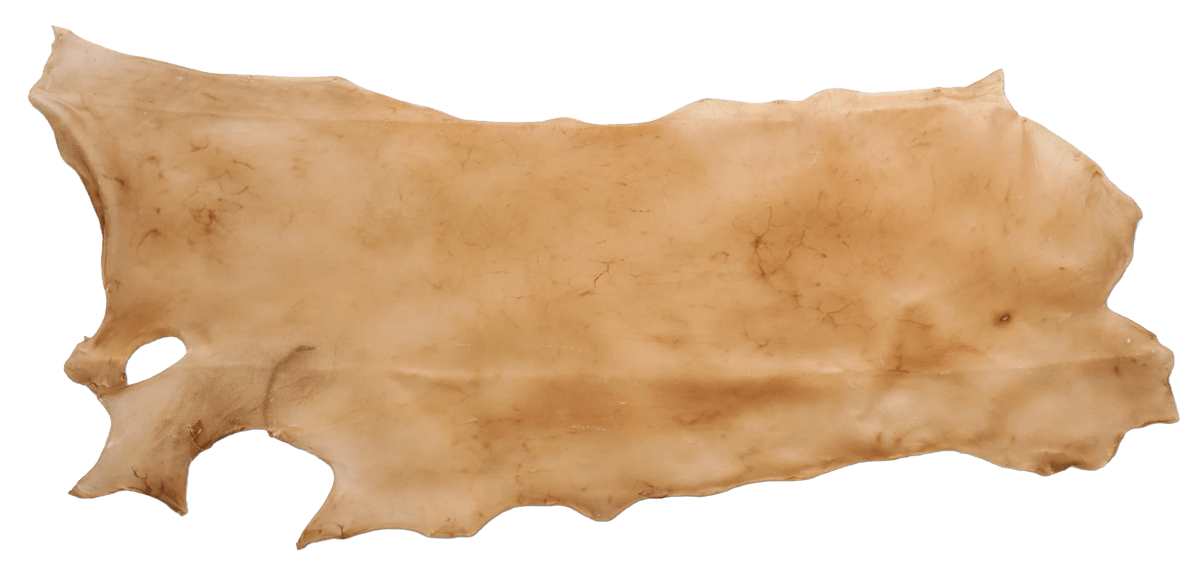
Just as human skin carries its own patterns, like a fingerprint that can never be duplicated, each hide holds its own unique character. Veins, variations in fiber density, and subtle rises and falls across the surface form a natural blueprint — one that exists only once. These markings are not flaws, but identity.
The craftsman never treats the hide as a uniform material.
Each piece is faced individually, and the process begins by reading what that hide carries within it.
金襴
Why Kinran Is Used in Our Samurai Dō
Kinran is a traditional Japanese luxury brocade fabric, distinguished by the use of gold (and sometimes silver) threads woven directly into the textile.
It is not embroidery laid on top — the pattern itself is the weave.
• How it’s made •
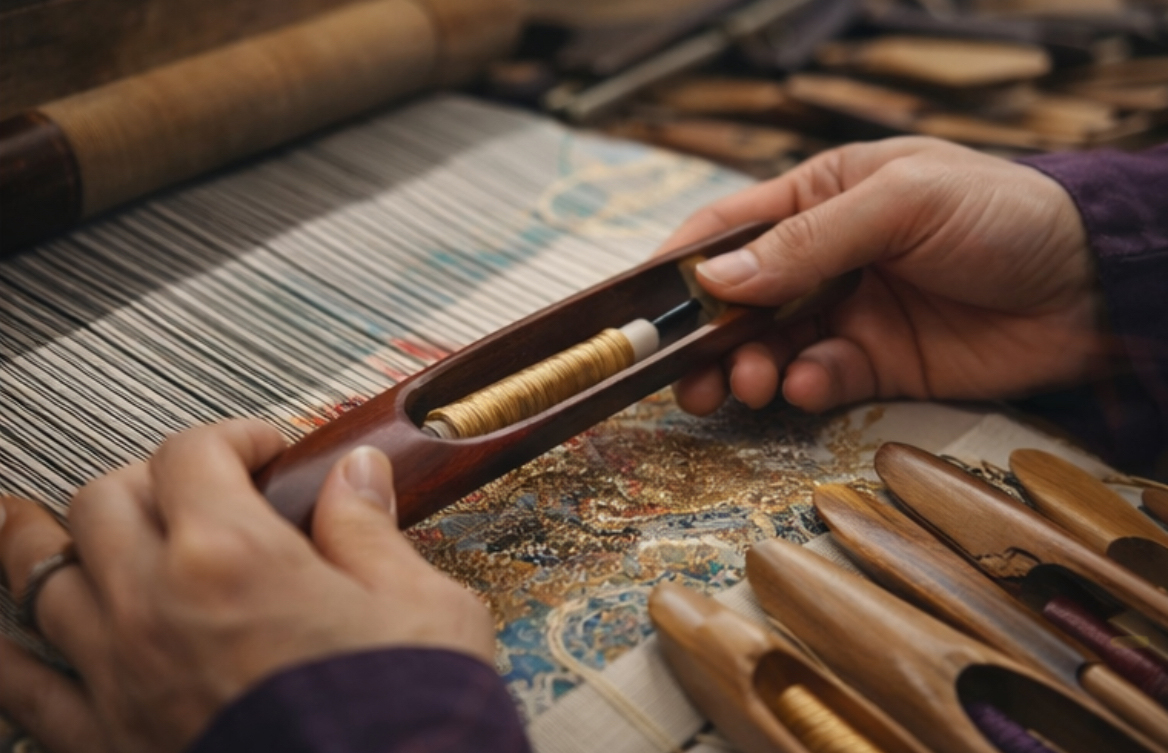
Gold thread is created by flattening gold leaf onto paper or silk, then cutting it into fine strips
1.
These strips are wrapped around a core thread
2.
Multiple colored silks and metallic threads are woven together on specialized looms
3.
The design emerges from structure — not surface decoration
This is why kinran has depth: patterns aren’t printed; they’re built.
What Is Nishijin Weaving?
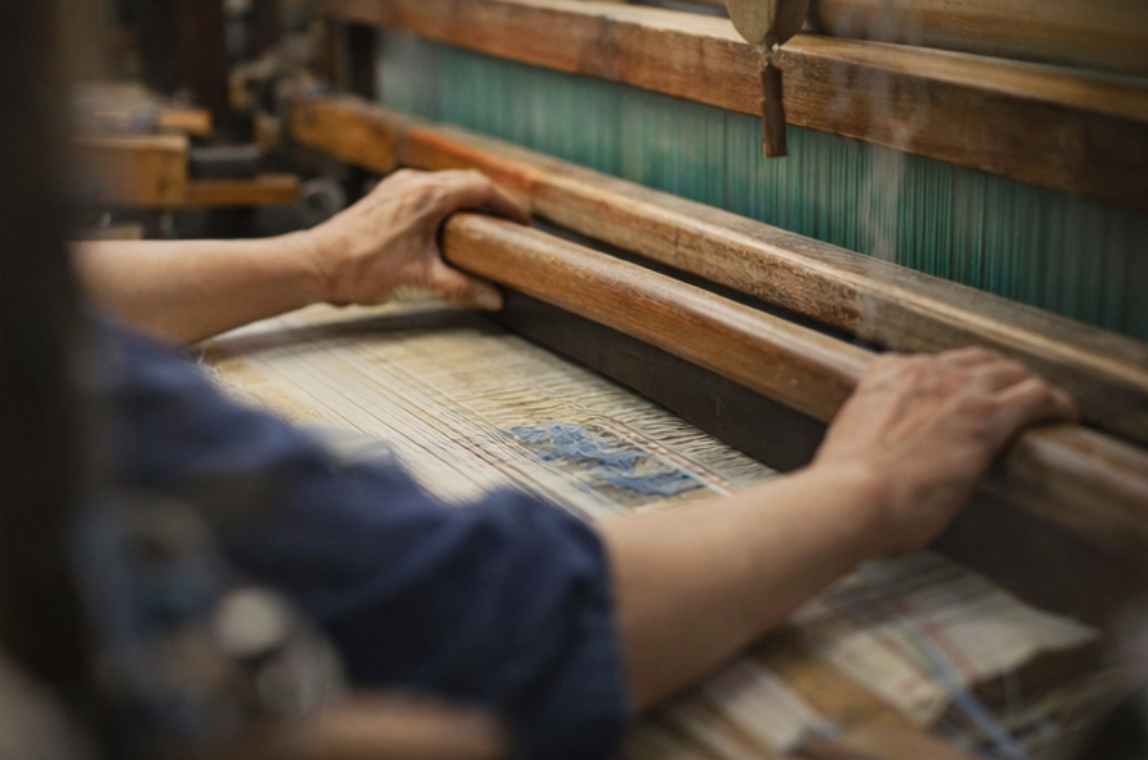
Nishijin weaving is one of Japan’s most esteemed textile traditions, carried on in Kyoto for over a thousand years.
Its development is deeply intertwined with the imperial court and aristocratic culture, where it refined itself through use in court attire, furnishings, and ceremonial spaces.
Patterns are not drawn onto Nishijin textiles.
They are woven into the structure itself.
Thus, Nishijin weaving is not merely fabric — it is a textile that embodies history itself, supporting authority, ritual, and spirit.
Crafting Masterpieces
The process begins with a quiet confrontation with each individual piece of bamboo.
By splitting, refining, and carefully shaping it, the underlying structure of the work gradually emerges.
From this earliest stage, decisions are guided by the unique character of each material.
In time, this structure becomes the foundation upon which the body is formed, its balance checked and secured with deliberate care.
Before any fabric is layered onto the form, there is an essential step that cannot be omitted: the creation of the Nishijin textile itself.
The fabric used here is not a pre-existing, ready-made material.
Each bolt is woven individually, with careful consideration given to pattern, thread selection, and weave density.
Every aspect is shaped by the hands of skilled artisans.
Standing before the loom, the weaver senses the tension and resonance of each thread, allowing no subtle irregularity to go unnoticed, and taking the time necessary to bring the cloth into being.
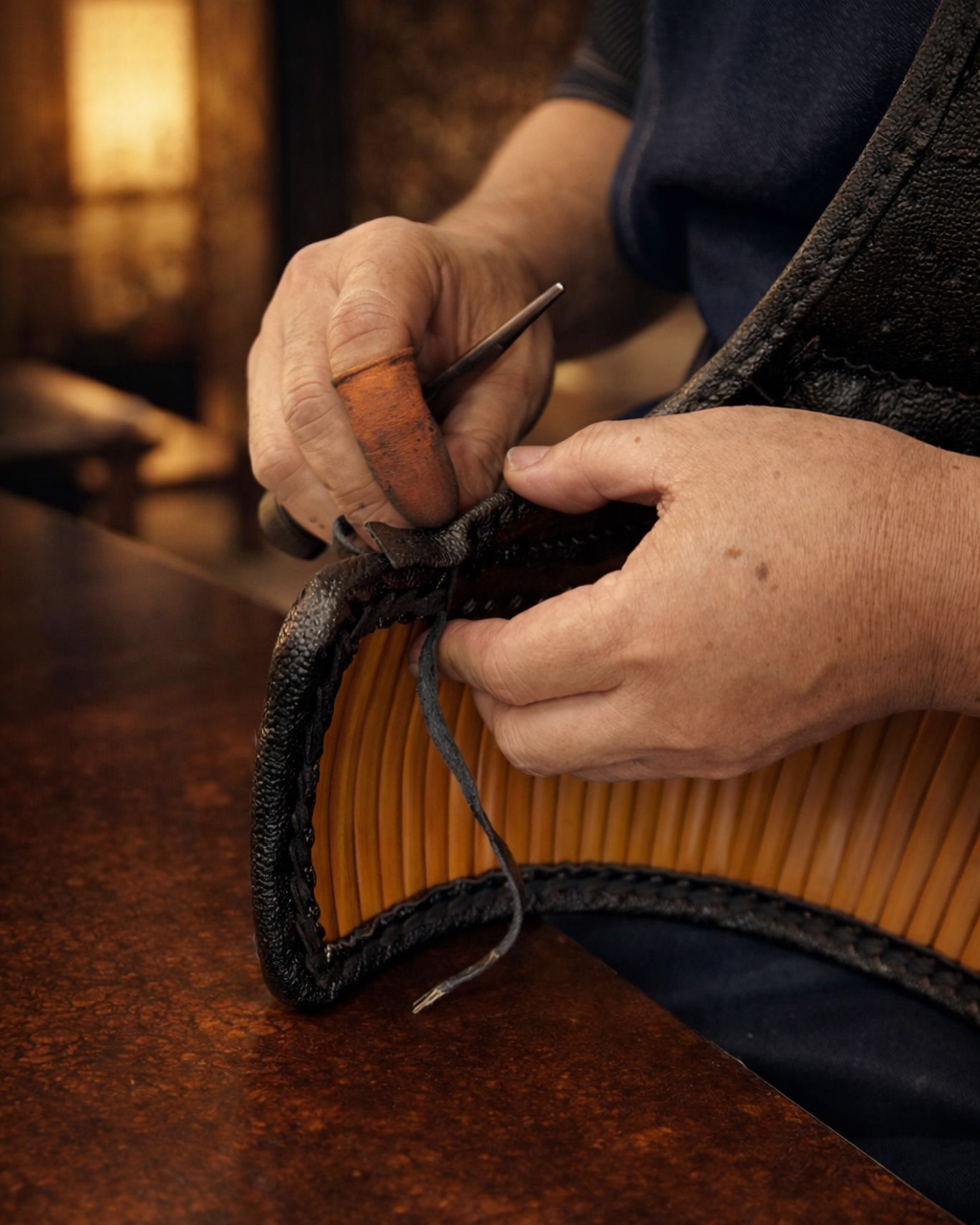

Once completed, the fabric is selected with great care so as not to disturb its natural expression or flow, and is then quietly layered onto the form.
This is not an act of simply “attaching” material, but a delicate process of harmonizing textile and structure.
When the fabric has settled, natural cowhide — no two pieces ever the same — is laid over the surface.
Its tension and breath are carefully judged as it is gently set in place.
Finally, the chest plate is crafted separately and united with the body.
At that moment, the work reaches a quiet completion — as a singular piece of art.
There is no prescribed speed, nor any fixed procedure in this sequence.
Every decision is guided by the craftsman’s sensitivity to the material and by the time devoted to it.
